
Introduction:
The Nayakar or Naicker/Nayakkar community is highly regarded and represents a well-established social group in South India, with a major concentration in Tamil Nadu, Andhra Pradesh, Karnataka, and Telangana. The Nayakars possess a rich and glorious history.
During ancient times, the Nayakars were known to be one of the bravest warriors, rulers, and administrators under the Vijayanagara Empire. They helped protect different regions and played important roles in the building of temples, promotion of art, and maintenance of law and order.
Nowadays, the people of the Nayakar community are involved in many fields like farming, business, education, and government services. The community very much values unity, culture, and hard work as a way to continue the legacy of their strong, noble ancestors
Significance of marriage in their caste:
Marriage hold more significance in the Nayakar community and is seen as an important part
Of their cultural identity and social values. The marriage creates a bond between two individuals and their whole family as well.
In Nayakar Tradition , marriages are usually arranged by elders by ensuring that the families share values, backgrounds and status.
Their wedding ceremonies are rich in rituals, customs, and celebrations reflecting their deep rooted culture and traditions.
The Nayakkar (also spelled Nayaker, Naiyakkar, etc.) are sometimes called by some alternative names, as follows: Kodangi Nayakar, Kodangi Naicken, Rajakambalam Nayakar, Kambalattar, and Thottiyar.
The blog is intended to be a record of the Nayakkar community marriage tradition, including descriptions of rituals and values, as well as the emotional aspects related to these traditions.
A closer look at each ceremony shows how every bit reflects their cultural identity, family values, and deep emotional connections. It is in this blog that the readers can understand the meaning behind the customs, respect for tradition, and strong sense of unity brought about by marriage within the Nayakar community.
Pre wedding rituals:
The pre- wedding rituals in the Nayakar Community are filled with joy, tradition and rituals. They really respect their respect for culture, family unity and the sacredness of marriage.
Few of their pre wedding rituals,
1.Matchmaking customs and family involvement:
- Nayakars marriages are usually arranged by elders in the family.
- Parents and Relatives contribute themselves in finding a suitable life partner who shares similar values in the background
- Horoscopy matching and family reputation are the key factors before finalising the match.
- Both families have a number of meetings and conversations, and agree with one another before proceeding with marriage.
2. Compatibility Check on Horoscope:
- A priest from the family or an astrologer checks for compatibility between the bride’s and groom’s horoscopes through a horoscopic compatibility match.
- A successful match is believed to bring peace, happiness, and prosperity in married life.
3. Engagement Ceremony:
- Once approved, the engagement ceremony (Nichyathartham) starts.
- After the horoscope matching, the family priest fixes the auspicious date and time for engagement. It is usually celebrated at the bride’s house or at the temple. Beautiful flowers, banana leaves, and bright-colored rangolis are used to decorate the space, making it appealing and creating a pleasant atmosphere.
- The groom’s family exchange gifts such as sarees, jewelry, fruits, sweets and betel leaves to the bride’s family.
- In return the bride’s family offers traditional clothes and sweets to the groom’s side.
- On the day of engagement, an elder or the family priest reads out the official engagement agreement which includes the name of the groom and bride , wedding date and promises made by both families.
- This step symbolizes the formal acceptance of the marriage proposal in front of the community and elders.
4. Ring and Garland exchange:
- The bride and groom exchange rings and garlands as a token of commitment.
- The family members shower them with flowers and blessings to celebrate their life.
Preparation of the bride’s and groom homes:
In the nayakar community, before the wedding, both families make intense preparations before the wedding filled with excitement.
1.Shopping and arrangements:
- The bride’s family shops for sarees, jewels and household items for the new couple.
- The groom’s family buys traditional clothes such as veshti(dhoti), shirts and gifts for the bride and her relatives.
- The family members give special attention to the wedding outfit of the wedding couple, often they are made with silk with traditional designs.
- They also collect items needed for rituals like trays, flowers, turmeric and coconuts.
2. Gold purchase and Mangalsutra preparation:
- Buying gold is an important part of the preparation of the wedding, as it requires purity and family pride.
- The bride’s parents buy gold ornaments such as necklaces, bangles and earrings for their daughter.
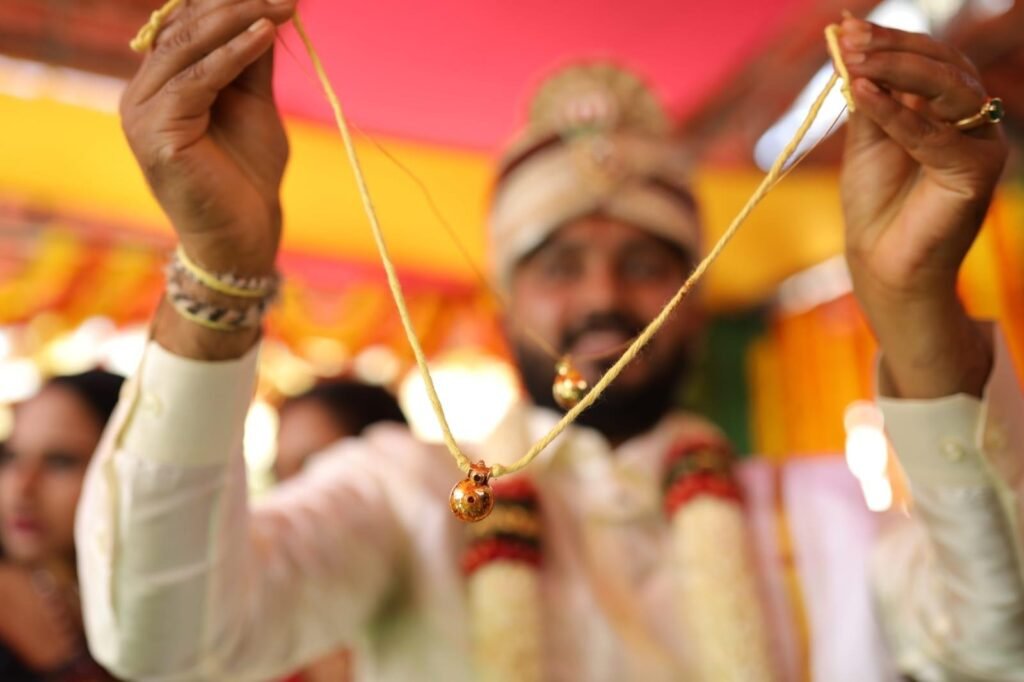
- The Mangalsutra (Thali) sacred thread tied by the groom during the wedding is specially made of gold .
- The Mangalsutra often carries the status of marital unity and divine blessings.
3.Printing Invitation card:
- Once the wedding date is fixed they start to choose an invitation design and they start to print.
- The first invitation is given to Lord Ganesha or other Gods for blessing before distribution of invitations.
4. Family gatherings and celebrations:
- The day before the wedding all the family members gather and help in all household works.
- Women sing songs and prepare sweets and snacks for the ceremonies.
- They make the home clean and decorated with flowers, banana leaves and colorful kolam at the entrance.
Wedding Day Rituals In Nayakar Community:
The Wedding day is the most important and sacred event. Every ritual has a deep cultural and spiritual meaning, reflecting the community’s respect for tradition.
Arrival of the groom’s Party (Janavasam):
- The Wedding day begins with the arrival of the groom and his family, known as the Janavasam.
- The groom is brought to the venue in a decorated car or on a chariot, with music, songs and relatives.
- The bride and their family warmly welcome at the entrance with flowers, garlands and smiling faces.
Welcoming rituals:
- At the entrance of the wedding hall or the temple, beautiful kolams or rangoli are drawn to bring prosperity and positivity.
- Aartahi includes circling a lamp or tray before the groom by the bride’s mother or any elderly woman to save him from evil eyes and to bless him.
- In some families, the Nalangu ceremony is performed, where turmeric and sandal paste are applied to both the bride and groom. It purifies them and freshens them up before the holy ceremony.
Main wedding ceremony:
The main wedding is performed by the purohit (Priest) who chants sacred mantras.
The grand ceremony includes several steps:
Kanyadanam:
In this ritual the bride’s father formally gives his daughter’s hand to the groom. This emphasises trusting her happiness and well being to him.
Mangalya Dharanam (tying the thaalli):
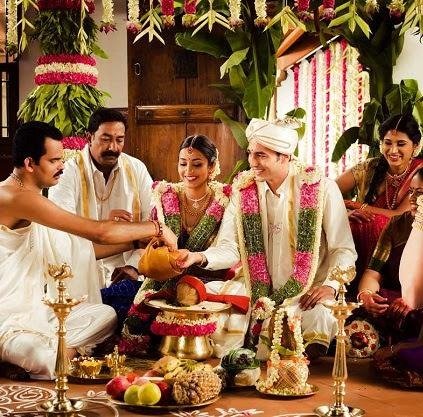
The groom ties the mangalsutra around the bride’s neck at the most auspicious moment. This is the most sacred part of the ceremony and represents the lifelong bond of the marriage.
The couple takes seven sacred steps around the holy fire, by each step representing,
- A vow towards nourishment and support
- A vow of growth and understanding
- A vow toward prosperity
- A vow of harmony
- A vow towards family and children
- A vow for all joys and sorrows
- A vow to be lifelong companions
- After these rituals, the bride and groom exchange garlands once more, signifying that their union is complete.
- Elders and other family members bless the couples with rice, flowers and words of blessing.
Traditional costuming and jewelry:
- The silk saree worn by the bride usually has colors of red, maroon, and gold. The bride also wears gold jewelry such as necklaces, bangles, earrings, and the sacred thaali.
- The groom usually wears a traditional veshti and angavastram, or shawl, mostly in white or cream color with a golden border.
Food served and cultural significance:
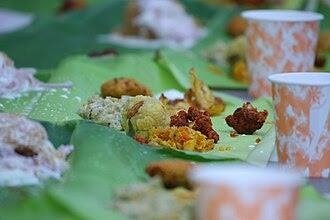
The food is prepared with care and served to the guests with love on banana leaves, according to tradition. The menu is usually rich, festive, and reflects real South Indian (Tamil) taste.
Breakfast Items
- Idli
- Vada
- Pongal
- Dosa / Rava Dosa
- Poori with Potato Masala
- Upma
- Kesari
- Coconut Chutney
- Sambar
- Filter Coffee
Lunch Items
- White Rice
- Sambar
- Rasam
- Poriyal (Beans / Cabbage / Carrot)
- Kootu
- Aviyal
- Vatha Kuzhambu / More Kuzhambu
- Puliyodarai (Tamarind Rice)
- Lemon Rice
- Appalam
- Pickle
- Payasam (Semiya / Paruppu / Paal Payasam)
- Boondi Laddu
- Jangri
- Mysore Pak
- Curd Rice
- Buttermilk
Post Wedding Ceremonies:
After the beautiful wedding there are many post wedding rituals and ceremonies. It purely concentrates on the love and affection between the two families and the bride going to new home. Each ceremony hold deep meaning and tradition.
Reception or Valeyadal:
- After the wedding, a reception is organised either on the sane day or the following evening.
- In some Nayakar families, the reception is held with playful games between the bride and the groom families.
- Common games include, searching a ring in the pot of water and other fun challenge games will be conducted.
- It creates the love and understanding of the newly married couple.
Sammandhi Virundhu:
- The term Sammandhi Virundhu means “feast for the in laws”
- The special meal is given to the bride’s family for the groom’s family and relatives after the wedding.
- The feast includes a variety of traditional dishes, sweets and savouries.
Bride’s Farewell (Send-off):
- The farewell ceremony is known as “Ponu Azhaipu”
- It is one of the emotional moments.
- The bride’s parents and relatives bless the couple to get into the new home.
- The bride receives lots of gifts includes, clothes, home appliances, jewelry etc..
- The bride’s departure from her house is accompanied by emotional goodbyes and prayers for her to live happily.
Rituals at Groom House (Veetu Varaverpu):
- After the arrival of the couples The bride is welcomed to the home with the ritual of Veetu varaverpu.
- The groom’s mother will take aarth for the couples and apply tilak on the couple’s forehead to invite blessings.
- The bride places her right foot while entering into the house which symbolises good fortune and prosperity.
- Inside, she is guided to perform small rituals such as lighting the lamp or touching rice pots, representing her new role in the household.
- Relatives bless the couple, and a small feast or sweet distribution follows to celebrate the bride’s arrival.
Cultural Symbolism
Meaning behind key wedding rituals
1. Horoscope matching (Jathagam Porutham):
- They see matching using horoscopes to know and identify the peace, compatibility and prosperity between the couple’s life.
- It also represents the belief that marriage is guided by destiny and divine alignment.
2. Engagement Rituals (Nichayathartham):
- It symbolises the formal agreement between families.
- It shows the acceptance of alliance. With blessings.
- Exchanging the gifts and rings represent a new relationship of trust.
3. Welcoming the Groom (Mapillai Varaverpu):
- They celebrate the groom’s arrival like respected guests and future family members.
- Rituals like kolam, Aarthi, and flower garlands will be put to him to protect him from evil eyes and to bring prosperity.
- The bride’s family shows hospitality and union between two families.
4. Nalungu:
- Nalungu is performed to relax the bride and groom before the main ceremony.
- It is a playful ceremony between two families.
- Applying turmeric, kumkum and making playful gestures bring joy, purity and prosperity.
5.Tying Thaali:
- This is the key and sacred moment of the wedding.
- The thaali represents:
- Protection
- Marital commitment
- The groom’s promise to care for the bride
- The bride’s entry into a new family
- It makes the bride a married woman in the society.
6. Kanyadaanam (Giving Away the Bride):
- In this ritual, the brides formally give their daughter to the groom.
- It shows their faith that the groom will protect and support her.
- Emotionally, it represents the parent’s blessing for her new life.
7. Saptapadi (Seven steps around the fire):
Each step represents a major promise made by the couple:
- Togetherness and nourishment
- Strength and health
- Prosperity and wealth
- Happiness and love
- Family growth and blessings
- Longevity and peace
- Lifelong friendship and loyalty
These steps symbolize that their marriage is built on trust, duty, and partnership.
8. Welcome home: (Veetu Varaverpu):
- When the bride enters the groom’s house, she is welcome with aarthi and light.
- Lighting the lamp signifies that the bride brings prosperity, love, and positivity into the home.
Role of Caste, Religion and family Values of Nayakar Family:
- Their rituals reflect caste based customs, especially in matchmaking, Thali design and traditional wedding sequences.
- The Nayakar community follows specific customs that have been passed over for generations, making caste as a key factor for shaping their marriage rituals.
- The involvement of caste based traditions ensures that their caste involves ancestral heritage.
- Their community wedding slightly depends upon the region Coimbatore, Salem, Madurai, Tirunelveli, Thoothukudi, and surrounding Kongu areas.
- The decoration, wedding timings and the rituals reflect local customs and regional influences.
- Elders play a major part in family decisions, blessing, supporting and guiding the couple.
Blending Tradition with Modernity:
Whatever the tradition is Nayakar’s wedding include modern adaptation such as,
- Professional photography and videography
- Designer sarees, suits, and contemporary jewelry
- Modern reception themes
- Music, stage decor, and event planners
Conclusion:
In Nayakar Community, every ritual from matchmaking to welcoming home carries deep meaning that shows the community’s respect for family bond, blessings and spiritual harmony. Through this we can clearly understand the Nayakar community continues to honour its heritage with modern aspects and touch. They make it important; it’s not about the couples but it is all about the family.