
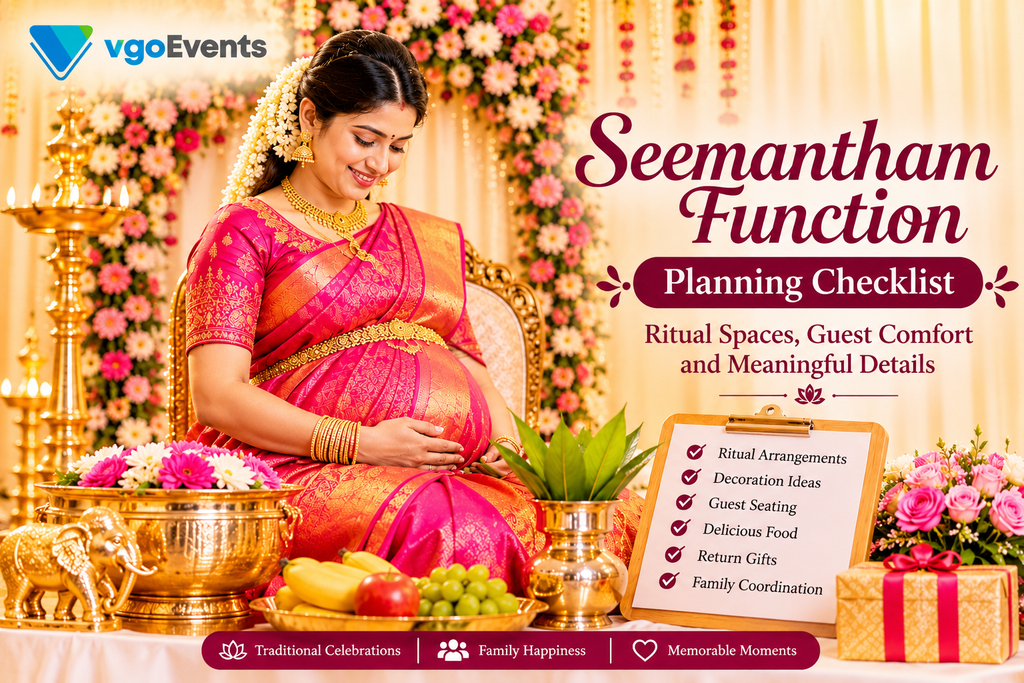
Introduction: Celebrating Motherhood with Tradition, Love and Blessings
Some celebrations are more than just special occasions. They represent family values, cultural traditions, emotional connections and beautiful new beginnings. A Seemantham function is one such meaningful celebration that welcomes motherhood and brings families together to bless the expecting mother and her baby.
Traditionally celebrated in many South Indian families, Seemantham is an important pregnancy ceremony associated with prayers, blessings and the well-being of the mother and child. Depending on family traditions, it may be celebrated alongside Valaikappu, the beautiful bangle ceremony in which women bless the expecting mother with colourful bangles.
From traditional pooja arrangements and floral decorations to comfortable seating, delicious refreshments and thoughtful return gifts, every element contributes to creating a memorable celebration.
However, organising a Seemantham function requires more than beautiful decorations. Proper coordination, family responsibilities, ritual preparation and guest management are equally important.
At VGO Events, we believe that a successful celebration combines traditional elegance with thoughtful event planning. This guide will help families understand how to plan a Seemantham function beautifully, comfortably and without unnecessary last-minute stress.
1. Understanding the Cultural Significance of a Seemantham Function
Before planning the decorations and arrangements, it is important to understand the meaning behind the celebration.
Seemantham is traditionally associated with prayers and blessings for the expecting mother and her unborn baby. Families gather to express their love, offer blessings and celebrate the upcoming arrival of a new family member.
In Tamil households, Valaikappu is another cherished tradition associated with this stage of pregnancy. Colourful glass bangles are placed on the mother’s wrists by married women, elders and relatives as part of the family’s customary blessings.
The ceremony may include:
- Traditional pooja and prayers.
- Blessings from parents, grandparents and elders.
- Bangle ceremony and floral adornments.
- Presentation of sarees, jewellery and traditional gifts.
- Distribution of sweets, fruits and refreshments.
- Family photographs and memorable moments.
Every family may follow slightly different rituals depending on its customs, religious practices and regional traditions. Therefore, discussing the ceremony with elders and the priest beforehand is essential.
Event Planning Tip: Create a ritual schedule before finalising the event arrangements. This ensures that decorations, seating, pooja materials, photography and refreshments are prepared at the appropriate time.
2. Creating a Beautiful and Functional Ritual Space
The ritual area is the heart of a Seemantham celebration. It deserves special attention because most important ceremonies and family blessings take place here.
A beautifully arranged ritual space should reflect traditional South Indian elegance while providing enough room for family members and priests to participate comfortably.
Traditional Decoration Ideas
Consider combining traditional elements with sophisticated event styling.
- Fresh jasmine and marigold flower arrangements.
- Mango leaf torans at the entrance.
- Traditional brass kuthuvilakku lamps.
- Elegant silk or fabric backdrops.
- Decorative wooden seating or an ornate ceremonial chair.
- Brass kalasam arrangements.
- Traditional kolam designs.
- Floral garlands and hanging decorations.
Choosing the Right Colour Theme
The colour palette should complement the traditional atmosphere of the ceremony.
Some beautiful combinations include:
- Pink and Gold: Elegant, festive and feminine.
- Yellow and Green: Traditional and refreshing.
- Peach and Ivory: Soft, sophisticated and modern.
- Maroon and Gold: Rich South Indian traditional elegance.
- Pastel Pink and Cream: A graceful contemporary look.
The decoration should enhance the ceremony rather than overpower it. Maintain a balance between flowers, lighting, traditional elements and seating arrangements.
Important Ritual Space Checklist
- Confirm the exact pooja location.
- Arrange a clean and spacious ceremonial area.
- Coordinate with the priest regarding ritual requirements.
- Prepare the required pooja materials.
- Arrange traditional lamps and flower trays.
- Keep ceremonial gifts and offerings organised.
- Provide sufficient space for family members.
- Ensure easy access for the photographer.
3. Comfortable Seating Arrangements for the Mother-to-Be
The expecting mother is the centre of the celebration. Her comfort should be the highest priority throughout the function.
A beautifully decorated stage may look impressive, but the seating arrangement must also be practical and comfortable.
Planning the Perfect Seating Setup
Choose a supportive chair with comfortable cushioning and suitable back support. Avoid unnecessarily high seating or arrangements that require difficult movement.
Consider the following:
- Provide a comfortable chair with proper back support.
- Arrange a footrest if required.
- Keep drinking water nearby.
- Ensure sufficient space around the chair.
- Avoid excessive heat from lighting equipment.
- Provide easy access to restrooms.
- Arrange a nearby resting area.
- Keep the ceremony schedule flexible.
Family members should also avoid keeping the mother-to-be seated for unnecessarily long periods without breaks.
Family Seating Arrangement
A well-organised seating layout makes the ceremony more meaningful and manageable.
Suggested arrangement:
- Central ceremonial seating for the expecting mother.
- Seating beside her for her spouse, if included in the family’s customs.
- Reserved seating for parents and grandparents.
- Dedicated space for the priest and ritual participants.
- Comfortable seating for elderly relatives.
- General guest seating with clear walking pathways.
The seating plan should allow guests to witness the ceremony without crowding the ritual area.
4. Dividing Responsibilities Among Family Members
Family participation makes a Seemantham function emotionally special. However, without proper coordination, important tasks may be overlooked.
Assigning responsibilities beforehand helps everyone contribute without confusion.
Suggested Family Responsibilities
Parents of the Expecting Mother
- Coordinate the traditional arrangements.
- Discuss the ritual schedule with elders.
- Arrange traditional clothing and ceremonial gifts.
- Coordinate with the priest.
Spouse and His Family
- Participate in the ceremony according to family customs.
- Coordinate their family’s arrival.
- Arrange agreed ceremonial contributions.
- Support the expecting mother throughout the celebration.
Sisters, Aunts and Female Relatives
- Assist with bangle ceremony arrangements.
- Prepare flower and blessing trays.
- Coordinate traditional rituals.
- Help distribute ceremonial gifts.
Event Management Team
- Coordinate decorations and stage arrangements.
- Manage seating and guest reception.
- Coordinate catering and refreshments.
- Manage photography and videography.
- Monitor the event schedule.
- Handle last-minute requirements.
One family member should ideally act as the main point of contact for the event coordinator. This prevents multiple instructions from creating confusion.
5. Guest Invitations and Reception Management
A warm welcome creates the first impression of any celebration.
For a Seemantham function, the invitation and reception arrangements should communicate the happiness and importance of the occasion.
Invitation Planning
Prepare invitations that include:
- Names of the expecting parents.
- Names of the hosts.
- Ceremony date and time.
- Venue and complete address.
- Traditional ceremony details.
- RSVP contact information.
Digital invitations are convenient for sharing through WhatsApp, while printed invitations can be prepared for close relatives and elders.
Guest Reception Arrangements
When guests arrive, they should know where to go and whom to approach.
Plan for:
- A welcoming entrance decoration.
- A dedicated reception desk.
- A guest list or attendance coordinator.
- Drinking water and welcome refreshments.
- Clear directions to the seating area.
- Assistance for elderly guests.
- Separate space for footwear, if needed.
A well-managed reception prevents crowding and allows guests to enjoy the celebration from the moment they arrive.
6. Refreshments and Traditional Food Arrangements
Food is an important part of South Indian family celebrations. A thoughtfully planned menu adds warmth and hospitality to the occasion.
The menu should reflect family preferences, regional traditions and the time of the ceremony.
Traditional Refreshment Ideas
Welcome Drinks
- Fresh fruit juice.
- Buttermilk.
- Tender coconut water.
- Traditional panagam.
Snacks and Sweets
- Mini idli.
- Sundal.
- Mysore pak.
- Laddu.
- Jangiri.
- Traditional mixture.
Traditional Lunch Menu
- Steamed rice.
- Sambar.
- Rasam.
- Poriyal.
- Kootu.
- Appalam.
- Curd.
- Payasam.
- Traditional pickles.
A banana-leaf meal can add an authentic South Indian touch to the celebration.
Catering Coordination Checklist
- Confirm the guest count.
- Finalise the menu with the family.
- Arrange drinking water stations.
- Provide comfortable dining arrangements.
- Plan food service according to the ceremony schedule.
- Arrange sufficient catering staff.
- Consider dietary preferences and restrictions.
- Keep food service areas clean and organised.
Important: Avoid unnecessary delays between the ceremony and refreshments. Guests should have a clear idea of when food will be served.
7. Meaningful Return Gifts and Keepsakes
A Seemantham function is a celebration of blessings, and return gifts provide a lovely way to thank family members and guests for being part of the occasion.
Rather than choosing ordinary gifts, families can select useful, traditional and memorable keepsakes.
Traditional Return Gift Ideas
- Kumkum and turmeric gift sets.
- Small brass or German silver pooja items.
- Decorative kumkum bowls.
- Traditional diya sets.
- Miniature kalasam collections.
- Handcrafted gift boxes.
- Small traditional decorative pieces.
Elegant Modern Gift Ideas
- Personalised gift hampers.
- Scented candles.
- Decorative jewellery boxes.
- Premium dry fruit boxes.
- Handcrafted keepsake trays.
- Personalised thank-you gifts.
Creating Beautiful Gift Presentation
Presentation makes even a simple gift feel special.
Consider:
- Elegant gift packaging.
- Traditional fabric pouches.
- Personalised thank-you tags.
- Matching colour themes.
- Neatly arranged gift hampers.
For families looking for traditional gifting options, handcrafted brass and German silver products can make beautiful keepsakes that guests may treasure for years.
8. Photography and Videography: Preserving Precious Memories
A Seemantham celebration includes many emotional moments that deserve to be remembered.
Professional photography and videography help preserve these memories for the expecting parents and their families.
Important Moments to Capture
- Entrance and venue decorations.
- The expecting mother getting ready.
- Traditional pooja arrangements.
- Bangle ceremony.
- Blessings from grandparents and elders.
- Family group photographs.
- Traditional food arrangements.
- Return gift distribution.
- Candid family interactions.
Photography Setup Tips
Create a dedicated photo area with good lighting and an elegant background.
Avoid placing lighting equipment too close to the mother-to-be. Ensure photographers do not obstruct the priest or family members during important rituals.
Plan a short photography session before or after the main ceremony so the mother does not become tired.
9. Complete Seemantham Function Planning Checklist
A checklist helps the family and event management team track every important requirement.
Before the Function
- Confirm the ceremony date and auspicious time with the family and priest.
- Finalise the venue.
- Prepare the guest list.
- Send invitations.
- Finalise the decoration theme.
- Confirm the catering menu.
- Arrange the expecting mother’s outfit.
- Purchase bangles and traditional accessories.
- Confirm pooja materials with the priest.
- Arrange photography and videography.
- Finalise return gifts.
- Assign responsibilities to family members.
One Day Before the Function
- Check stage and seating arrangements.
- Confirm decoration materials.
- Verify catering arrangements.
- Arrange ceremonial trays and gifts.
- Check sound and lighting equipment.
- Confirm the photographer’s schedule.
- Prepare welcome and reception areas.
- Reconfirm the event timeline.
On the Function Day
- Complete entrance decoration.
- Arrange fresh flowers and traditional lamps.
- Keep pooja materials ready.
- Check the mother’s seating comfort.
- Welcome guests.
- Coordinate with the priest.
- Manage the ceremony schedule.
- Coordinate refreshments and meals.
- Arrange family photographs.
- Distribute return gifts.
- Check the venue before closing.
10. Why Professional Event Coordination Makes a Difference
A Seemantham function involves several activities happening within a limited period. Even small delays in one area can affect the entire programme.
Professional event coordination helps families enjoy the celebration instead of spending the day managing arrangements.
An experienced event management team can assist with:
- Concept development and theme selection.
- Traditional and modern stage decoration.
- Floral arrangements and lighting.
- Ritual space coordination.
- Guest seating and reception management.
- Catering coordination.
- Photography and videography arrangements.
- Return gift presentation.
- Complete event-day coordination.
At VGO Events, we believe that every family celebration deserves thoughtful planning and individual attention.
Our approach focuses on understanding the family’s requirements, respecting cultural traditions and creating a beautifully coordinated event.
Whether you prefer a traditional Seemantham setup filled with jasmine, marigold flowers and brass elements or a sophisticated contemporary celebration, the arrangements should reflect your family’s personality and preferences.
Conclusion: Every Blessing Deserves a Beautiful Celebration
A Seemantham function is not simply another family gathering. It is a meaningful occasion filled with love, prayers, blessings and the excitement of welcoming a new member into the family.
From preparing the ritual space and arranging comfortable seating to coordinating refreshments and selecting meaningful return gifts, every detail contributes to the experience.
The secret to a successful celebration is thoughtful planning, proper communication and attention to the needs of the expecting mother and her family.
At VGO Events, we believe that the most beautiful celebrations are created when traditional values meet creative event planning.
Let us help you transform your Seemantham celebration into a graceful, memorable and stress-free experience that your family will cherish forever.
VGO Events – Creating Beautiful Celebrations, One Meaningful Moment at a Time.
One Wedding, Three Looks: How to Transform a Venue for Muhurtham, Lunch and Reception
Click the link below to explore more of our beautiful product collection.
Let explore our premium ceramic japanese tea port
Click the link below to explore our beautiful collection of premium brass products.
Premium Brass Amman idols for home deors or return gifts