
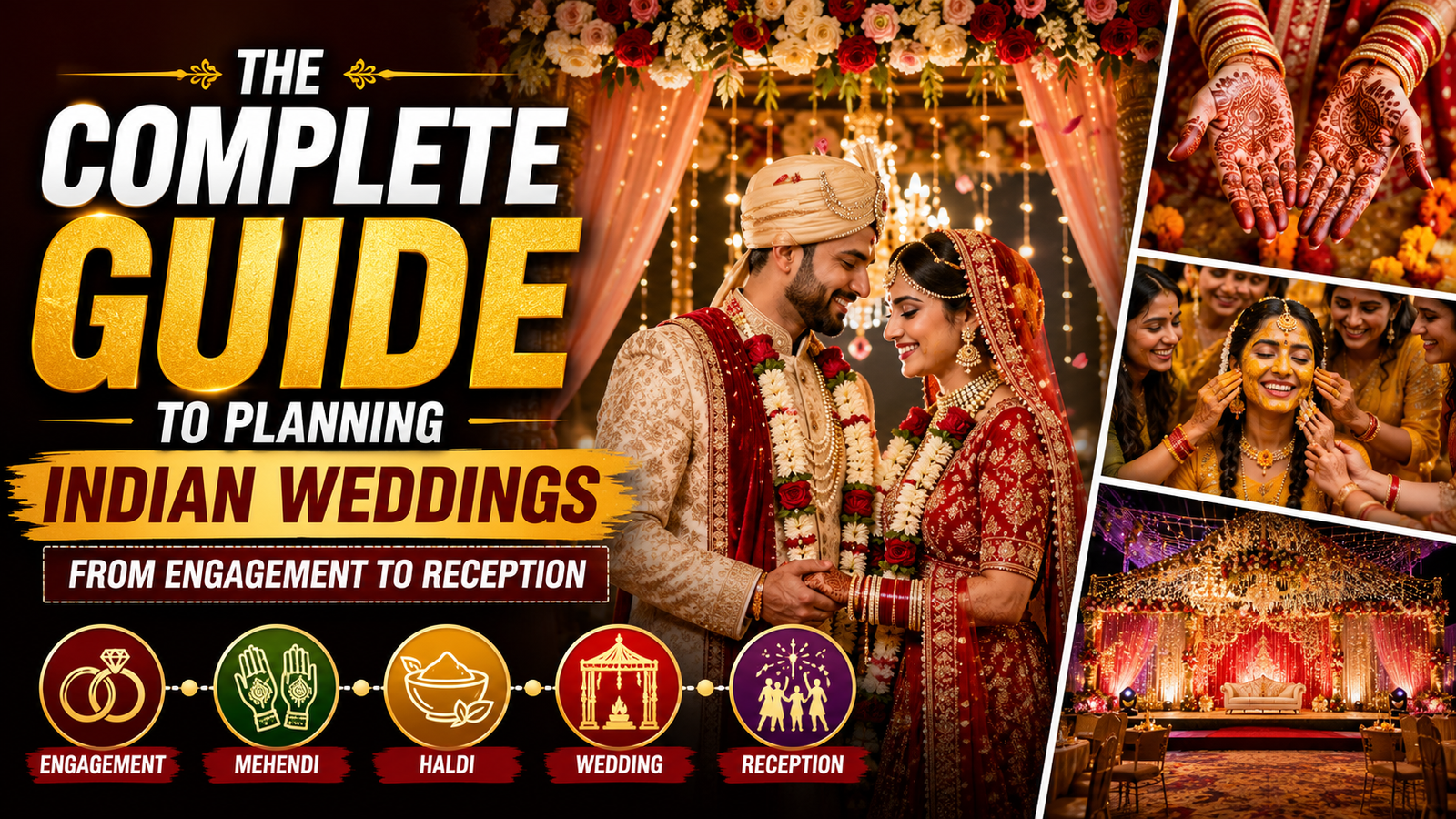
The engagement gets announced, congratulations pour in, and somewhere between the third “so when’s the date?” call, a quiet panic sets in. Where does anyone start with something this big?
Indian wedding planning genuinely is a lot: multiple ceremonies, dozens of outfits, a guest list that grows daily. But it’s not chaos, just a lot of small decisions made one at a time. This guide covers timelines, budgets, ceremony breakdowns, and the mistakes almost everyone makes.
What Makes Indian Weddings So Special?
Indian weddings are rarely just one day. They’re more like a mini festival spread across a week, with each event carrying its own outfit, music, and mood. The haldi is quiet and pleasantly chaotic, the sangeet feels closer to a concert, and the wedding ceremony itself is both solemn and overwhelming.
What holds it together isn’t the décor, it’s family. Parents join vendor calls, grandparents insist on traditions nobody argues with, and cousins arrive early “just to help.” That’s why this kind of planning feels heavier than a single day wedding: you’re organizing a narrative with six or seven chapters, and a Punjabi, Tamil, or Bengali wedding barely resemble each other.
Indian Wedding Planning Timeline
| Timeline | What to Focus On |
| 12 Months Before | Set budget, book venue, hire wedding planner |
| 9 Months Before | Shortlist photographers, decorators, caterers; start outfit shopping |
| 6 Months Before | Send save the dates, finalize menu, book bridal makeup |
| 3 Months Before | Confirm guest count, invitations, sangeet/mehendi themes |
| 1 Month Before | Final fittings, vendor timelines, emergency kit |
| 1 Week Before | Rehearsals, welcome bags, vendor check ins |
| Wedding Day | Delegate, breathe, trust the team |
Good venues and vendors book up almost a year out, so lock in your date and venue first. Build in more buffer time than feels necessary. A tailor runs late, a flight gets rescheduled, plans shift. It always happens.
Step by Step Guide to Every Indian Wedding Function
Engagement Ceremony Rings, blessings, and the formal start of everything. Keep the guest list small for intimacy, and don’t rush it.
Mehendi Ceremony Usually everyone’s favorite: relaxed, colorful, and informal. Marigold garlands and floor seating make the classic look; yellow, green, and orange outfits photograph beautifully against it.
Haldi Ceremony Turmeric paste applied to bless the couple. Messy and loud, so cover furniture ahead of time and tell guests to wear clothes they don’t mind ruining.
Sangeet Night The big performance night, closer to a concert than a ceremony. Don’t treat sound and lighting as an afterthought.
Wedding Ceremony The emotional core, with rituals like the baraat, jaimala, saat phere, or nikah depending on region and religion. Walk the sequence with your priest ahead so photographers know when key moments happen.
Reception The most formal event, built for the wider circle of guests. Good lighting and a clear flow between dining and dancing make it feel elegant, not crowded.
Creating the Perfect Indian Wedding Budget
| Category | Typical Share of Budget |
| Venue | 25 to 30% |
| Catering | 20 to 25% |
| Photography & Videography | 8 to 10% |
| Décor | 10 to 15% |
| Outfits & Jewelry | 10 to 15% |
| Entertainment | 5 to 8% |
| Invitations & Favors | 2 to 3% |
| Miscellaneous | 5 to 10% |
Keep a contingency fund on the side. Last minute guests or vendor upgrades quietly eat into a budget with no room for surprises.
Did you know? Catering is usually the biggest expense after the venue, since weddings often serve multiple cuisines across several days.
Choosing the Right Wedding Venue
The venue shapes almost every other decision. Outdoor venues bring beauty but weather risk; indoor venues offer more control but need extra décor work. Destination weddings can be magical, but factor in travel for guests, especially older relatives.
Confirm real capacity against your biggest function, check accessibility and parking, and keep a weather backup plan. For multi day weddings, nearby accommodation helps out of town guests a lot.
Wedding Vendor Checklist
- Wedding Planner with experience in Indian weddings
- Decorator with setups from similar scale weddings
- Photographer & Videographer with full galleries to review
- Caterer with a proper tasting session
- Bridal Makeup Artist with a trial booked two months out
- DJ or Entertainment with Indian wedding music experience
- Priest or Officiant with ceremony timing discussed early
- Florist with seasonal availability confirmed
- Transportation arranged early for the baraat
Get policies, inclusions, and payments in writing.
Essential Bridal and Groom Checklist
Bride
- Outfits
- Jewelry (matched and insured)
- Comfortable footwear
- Makeup trial booked
- Emergency kit (pins, blotting paper, stain remover, pain relief)
Groom
- Outfits
- Footwear and accessories
- Grooming appointments
- Emergency kit (extra buttons, deodorant, comfortable shoes)
Shared
- Documents (ID, marriage license)
- Jewelry stored securely
- One person holding emergency supplies on the day
Quick checklist
- Marriage documents finalized
- Outfits tried on in the final week
- Emergency kits packed
- Vendor payments confirmed
- One point person per ceremony
Common Indian Wedding Planning Mistakes to Avoid
- Skipping a written budget
- Booking the venue before the guest list is settled
- Underestimating catering quantities
- Ignoring weather backup plans
- Skipping vendor timelines in writing
- Overloading the sangeet with too many performances
- Forgetting transportation for elderly guests
- Delaying outfit fittings
- Not assigning a point person per ceremony
- Trying to do everything alone
Why Hiring a Professional Wedding Planner Saves Time and Stress
| Factor | DIY Planning | Professional Wedding Planner |
| Time investment | High, months of research | Lower, planner does the legwork |
| Vendor relationships | Built from scratch | Established, often better rates |
| Budget management | Manual, higher overspend risk | Structured, fewer surprises |
| Day of stress | High | Low |
| Problem solving | Reactive | Proactive |
A good planner doesn’t just hang drapes. They manage the budget, coordinate every vendor, and solve problems quietly enough that you never hear about most of them.
Frequently Asked Questions
How far in advance should planning start?
Around 10 to 12 months, before peak season books up good venues and top vendors.
What’s a realistic budget?
It depends on city, guest count, and functions, but a mid range 300 guest wedding often falls between ₹15–40 lakhs.
How many ceremonies are typical?
Engagement, mehendi, haldi, sangeet, wedding ceremony, and reception, plus regional rituals depending on family traditions.
Should each ceremony have its own coordinator?
Not necessarily, but one point person per event keeps overlapping vendors organized.
Is a destination wedding more expensive?
Not always. Venue costs abroad can be lower, but guest travel usually raises the overall cost.
How do we blend North and South Indian traditions?
Work with a planner experienced in both, and blend rituals thoughtfully rather than choosing one side.
What’s the biggest first time mistake?
Underestimating how much coordination multiple ceremonies require.
How early should makeup trials happen?
At least two months out, with a final trial two weeks before the wedding.
Do we need a guide for each ceremony?
A checklist per function helps, since each has its own vendors and timing.
What goes in an emergency kit?
Safety pins, stain remover, pain relievers, blotting paper, extra jewelry backing, a phone charger.
Bringing It All Together
Indian wedding planning is a marathon with joyful detours built in. There will be stressful moments and at least one relative with strong opinions about the flowers. That’s just what it looks like.
Hold onto the small moments while you’re in it. The mehendi night, the fittings, the family debates over the guest list become the stories you tell for years. A well planned Indian wedding was never about perfection. It’s about a celebration that feels genuinely like the two of you.
Ready to start planning? Reach out to a wedding planning team for venue selection, decoration, entertainment, catering, guest management, and reception planning, so you spend less time on logistics and more time enjoying your own wedding.
Related Blogs
The Complete Indian Wedding Planning Guide For Couples