
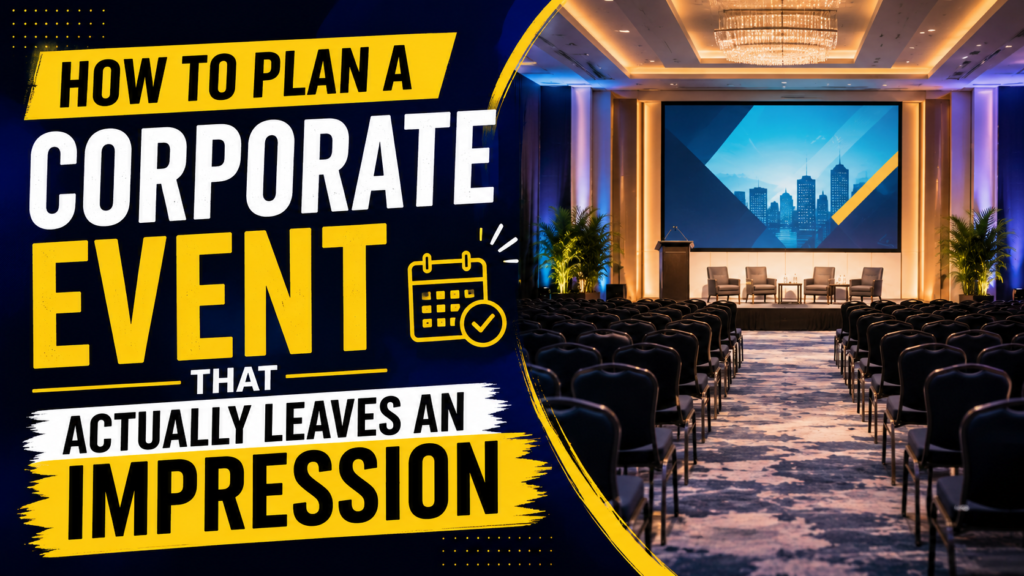
Most corporate events blur together after a while. Same buffet lines, same generic banners, same forgettable speeches nobody remembers by the following week. Attendees show up, they leave, and the event barely registers as anything more than a line on their calendar.
The events that actually stick with people are usually not the ones with the biggest budget. They are the ones where someone clearly thought through the experience from the attendee’s side, not just the logistics side. That distinction matters more than most planning checklists give it credit for.
This guide walks through what actually separates a forgettable corporate event from one people talk about weeks later, and how to build that into the planning process from the start.
Start With a Clear Purpose, Not Just a Date
A lot of corporate events get planned backward. The date gets locked in, the venue gets booked, and only later does anyone really ask what the event is supposed to accomplish. That order causes problems down the line.
Is this event meant to build client relationships? Launch a product? Boost internal morale after a hard quarter? Each of those goals calls for a different format, different guest list, and different tone. A product launch probably needs media coverage and a strong visual moment. An internal morale event probably needs less formality and more genuine connection time. Deciding the purpose first makes every decision after it faster and more consistent.
Know the Audience Before Booking Anything
Corporate events fail when they are planned for an imagined audience instead of the real one attending. A room full of senior executives has very different expectations than a room full of new hires at a company retreat.
Talking to a few actual attendees ahead of time, or at least reviewing feedback from past events, tends to reveal a lot. Maybe past events ran too long. Maybe the food options left several dietary needs unaddressed. Maybe the networking segments felt forced and nobody actually used them. Small details like these shape a much better plan than guessing based on assumptions.
Choose a Venue That Matches the Tone
The venue sets the tone before a single word of the program even starts. A stiff, overly formal ballroom sends a very different message than a relaxed, open space with natural light and comfortable seating.
Beyond atmosphere, practical details matter just as much. Does the space handle the expected guest count comfortably, or will people be packed shoulder to shoulder? Is there reliable audio-visual support built in, or will that need to be brought in separately? Are there enough restrooms and clear signage for a venue attendees may be visiting for the first time? These details rarely show up in glossy venue photos, so an in-person visit is worth the time it takes.
Build a Realistic Timeline
Corporate events often run on tighter internal deadlines than personal celebrations, which makes early planning even more important. Waiting until six weeks out to start booking a venue, caterer, and AV team usually means settling for whoever still has availability, not necessarily the best fit.
A general guideline is to start planning at least three to four months ahead for a mid-sized corporate event, and closer to six months for anything involving multiple cities, a large guest list, or executive travel. Locking in the date and venue first, then working through vendors, keeps the whole process from feeling rushed later.
Get the Budget Right From the Beginning
Corporate budgets often get approved as one lump number without much thought about how it actually breaks down. That approach makes it hard to catch overspending until it is already a problem.
Splitting the budget into clear categories, such as venue, catering, AV and production, staffing, décor, and printed materials, makes it much easier to track spending in real time. Building in a ten percent buffer for unexpected costs also avoids the awkward conversation of asking for more funding halfway through planning.
Do Not Underestimate the Power of Good Food
Food gets treated as an afterthought far too often in corporate event planning, and it really should not be. Attendees remember bad coffee and cold appetizers far longer than most planners expect.
Choosing a caterer with strong reviews specifically for corporate events, not just weddings or private parties, tends to make a real difference. It also helps to confirm dietary accommodations well ahead of the event date rather than scrambling to adjust the menu the week before.
Audio-Visual Planning Deserves Real Attention
A brilliant keynote speaker loses most of their impact if the microphone cuts out or the slides will not load. AV problems are some of the most visible and most avoidable mistakes at corporate events.
Testing every piece of equipment the day before, confirming backup microphones and adapters are on hand, and assigning one dedicated person to manage AV throughout the event all reduce the risk significantly. This is not an area to leave to whoever happens to be free that day.
Design the Guest Experience, Not Just the Schedule
A packed agenda is not the same thing as a good experience. Attendees remember how an event felt to move through, not just what was technically on the schedule.
Simple things make a noticeable difference here. Clear signage so people are not wandering looking for the right room. A smooth check-in process that does not create a long line at the door. Comfortable seating during longer sessions. Breaks built into the schedule instead of packing every minute with content. None of these require a large budget, just attention to the actual flow of the day.
Branding Should Show Up Everywhere, Not Just on One Banner
Corporate events are a chance to reinforce brand identity, but that often gets reduced to a single step-and-repeat banner near the entrance. Consistent branding throughout the space, from name badges to slide templates to signage, creates a much stronger impression.
This extends beyond the physical event too. Registration pages, confirmation emails, and any follow-up communication should carry the same visual identity, so the experience feels cohesive from the first invitation to the final thank you note.
Plan the Follow-Up Before the Event Even Happens
A surprising number of corporate events end without any real follow-up, which wastes a lot of the relationship building that just happened. Attendees who had a great conversation at a networking segment rarely follow up on their own without a nudge.
Sending a thank you message within a day or two, along with any relevant photos or event recordings, keeps the momentum going. For events focused on client relationships or lead generation, this follow-up window is often where the actual business value gets captured.
A Quick Corporate Event Planning Checklist
- Define the event goal and the audience it is meant to serve
- Set the date and lock in a venue that matches the tone needed
- Build a budget broken down by category with a buffer included
- Book catering with confirmed dietary accommodations
- Confirm AV needs and test everything in advance
- Design a realistic schedule with breaks built in
- Plan branding across the physical space and digital touchpoints
- Assign clear staff roles for check-in, AV, and guest support
- Prepare a backup plan for any outdoor or weather-dependent elements
- Draft follow-up communication before the event takes place
Why Bringing in Event Planning Support Helps
Internal teams juggling a corporate event on top of their regular job responsibilities often end up stretched thin right when the details matter most. Bringing in dedicated event planning support, even just for the logistics-heavy portions, frees up internal teams to focus on the content and relationships that actually justify the event happening in the first place.
Experienced planners also tend to catch details that get missed under time pressure, from accessibility needs to realistic timing between sessions. That kind of experience is hard to replicate without having planned dozens of similar events already.
Final Thoughts
A memorable corporate event rarely comes down to one single decision. It comes from a series of smaller choices, a clear purpose, a venue that fits the tone, food that actually gets noticed, AV that works without a hitch, and a guest experience that feels considered rather than rushed.
Planning with the attendee’s experience in mind, rather than just the internal checklist, is usually what separates an event people forget by the following week from one they are still talking about months later.